1.0
UNDERSTANDING THE “AWARENESS THEME PARK”
PURPOSE FOR THESE PARKS: To
Create Times and Spaces of WONDER, RESPECT, LEARNING &
CONNECTION
“Community Spaces for Learning, Sharing, Belonging & Celebrating ALL
Together:
Our World, Our Histories, Our Stories, Our Selves”
FOCUS
ON: “Solution
Oriented Problem Solving”
NO GOOD GUYS OR BAD GUYS. ONLY DEFINED PURPOSES, SOLUTIONS, AND HOW TO
FIX ISSUES.
For ALL ages, and also highly sought-after
Family Oriented Tourist Destinations: Everyone has a rest with lots of
fun, & learning, …about the universe, the world, nature and ourselves, filled with lots of character building
challenges.
THE
MORE HAPPY, HEALTHY PEOPLE & ENVIRONMENT, THE BETTER.
This picture could be shared across the
country, from Shore to Shore. Different
Communities could focus on themes and animals complementary to their specific
region.
1.1 TWELVE IDEAS FOR ‘AWARENESS THEME PARKS’:
SUMMARY: Each type of AWARENESS
THEME PARK has its own key emphasis around Creation & Nature. So far we have
considered these twelve themes:
1. WATERCRAB: Water Purification (How To Build Water Purification Filters & Make Energy from
Flowing Water)
2. BEAVER WATER DAM: Water Dams, Arbateau & Energy (How Dams & an Arbateau Change Biomes; the Differences between
Open Water Dams & Closed Flow Turbines; and Impellers vs. Propellers )
3. WATER FALL
& BEAR: Air Purification, The Water Fall Biome and Energy from Water
Dams (How Dams & Water Falls Change
Biomes; the Differences between Open Water Dams & Closed Flow Turbines;
and Impellers vs. Propellers )
4. PORCUPINE: Material Choices in
Design (Define Waste; Explore Open & Closed Systems, Organic Materials
and Material Life
Cycles; and Material Properties or Qualities. Specific Materials for
Specific Purposes; & Nature’s Solutions for Design Conceptions)
5. RAINBOW
& BUTTERFLY: Medicines found in Nature (What
the Elders Teach Us)
6. GLOOSCAP, The TURTLE, BEAVER, & OTTER: Living In
Nature (Forest Activities & Stories)
7. DEER HUNT, BUTTERFLIES & SEASONS: Cycles of Life (Life/Death/Hunting/Respect, Seasons & History)
8. SPIDER: Active Listening and Effective Communications (Reception and Transmission in Communication, What
are Frequencies?
9. EEL & PENGUIN: Caring & What It
Means (Going the extra mile. Can you make someone smile?)
10. SANDPIPERS & MINNOWS: (What are the strengths of teams? Ways of
creating strong and dynamic Teams. How do murmuring movements work?)
11. EAGLE & Crack of the Fire: PERSPECTIVE, LEADERSHIP: Why
Leadership is the Most Challenging Role (Understanding
How To Put Others First, To Make It Work)
12. TURTLE POND: A space for a wonderful evening walk.
See (Appendix
1) for a full breakdown of core subject activities and
possible lessons for each of the twelve example parks.
Each AWARENESS PARK description is broken down into: a) the PARK NAME,
b) the REASON for animal choice, c) what the park can TEACH, d)
how the lesson can be applied through the DESIGN process, and e) some
potential LOCATION that could possibly be considered.
Awareness parks are not limited to these examples. Communities can take what they like and add
what they want. If the park has the key
functional elements, it can be added to the AWARENESS PARKS location map.
1.2 DAILY ROUTINE
ACTIVITIES:
Daily Opening &
Closing Events: Thanksgiving Poem - created by ALL attending (spoken or
unspoken)
Quiet 1 Minute Moment of AWARENESS and Appreciation
Community Singing / Drumming
Astronomy & Seasons: Videos & Lessons from Elders or Gerald Gloade? Same time daily.
Morning: Meditations
& Quiet Walk or Exercises
1 HR/DAY: Supervised – Visit
with an Animal a Dog/Cat/Rabbit/Hermit Crabs/
Bird/Spider/Worm or other
animal visit.
Evening: Fire
Pit Stories, Talks, Singing, Sharing & Listening, Guest Speakers,
Live Performers or Movie
“Little Tykes” – Wonderful Walk through the wooded trail of
solar lights & animal sculptures (up to 1 hour
after sunset or as long as lights last).
Numerous Activities throughout the day, with
new learning challenges every day for a week.
“Come for a day, …Stay for a week!”
1.3
‘AWARENESS THEME PARKS’ – PARK STRUCTURES, BUILDINGS & SPACES.
THE KEY
ELEMENTS of the PARK:
Each Park Includes the following spaces to encourage WONDER,
INTERACTION,
and LEARNING:
1)
Artistic
Park Theme SCULPTURE– A “FRED Design” (Fred has Great Ideas) Or
Artistic `
Construction Concepts (Eg.
WATER CRAB, TURTLE POND & WATERFALLS)
2)
A
Basic Stage - a Wooden
Platform with Whitewall Backdrop & Portable Sound System
(for daytime Teen Karaoke & Drama Performance, Movies/Guest Speaker
PowerPoints/Live Music)
3) A
Firepit – for Indigenous
Stories and Astronomy, Meditations and Talking & Sharing Times
4) Indoor/Outdoor Young Family Locations – Indoor Picture Book Library Spaces with
small figurine animals and large washable animal shaped pillows/small painted
chairs (for sale at front?) for the children to play with while being read
to. Drawing tables where small children
can make Pictures or use Clay to express what they are learning about. Outdoor
Spaces around the area with canopies of shade (Trees, gardens, etc.) having
animal figurines placed around buildings and bushes that children can search
for & identify, and where young families can find a spot to stop and put a
blanket out for baby to lie on.
5) Water
Activities - Splash
pads/sprinkler areas, water tables & sandboxes, for 3-6
year olds.
6) Tapa Sampling Coffee Shop - to highlight local
produce (Produce can be ordered to their homes or hotels on the spot). Directly Beside the Coffee Shop there is
a Daycare.
**IMPORTANT:
GLASS WALL BETWEEN DAYCARE SPACE & RESTAURANT SPACE** (Parents can
relax while watching their young children play. Daycare based on Roo’s Playhouse model – (25
play station locations for kids 6 months-6 years old. Professionally supervised
and managed.)
7) DEFINED COMMUNITY SPACES: A
Different Family & Community Spaces or Room Locations for each age group’s
interests. These are important, because
it allows all ages
8)
Under
6 - daycare, picture book
library, animal visiting station
9)
Open
to ALL - STEAM (Science, Tech, Engineering, Arts & Math)
Maker-Space to Apply Learned Daily Teachings. 2nd STEAM space for
7-14 year olds to be louder in.
10) Teen Centre (Music Lessons, Tye Dye T-Shirts with
community logo, High End Crafts, Woodworking, Drama, Cooking, etc. – Run by
older Students for Teens.)
11) Parent Relax Station / Tapa Coffee Shop where children can be
viewed in day care.
12) Theatre for viewing items related to Sustainability Issues, Wilderness and Tech
around Park Theme
13) Large Green House for teaching about compost and vertical
farming
14) Six to Eight Classroom Spaces for breakaway sessions and conference rooms.
15) Farmers Market Restaurant & Bar with Rooftop Patio or Open Sky to view Night
Sky
16) Change rooms & outdoor shower - if water / sprinkler / mud slides
available
17) Family Challenge Station & INFO Booth – A Central Spot to FIND OUT about:
- TODAY’S SPECIAL
ACTIVITIES. Source to get info, maps
and materials
- Photo Scavenger
Hunt Challenges: Wild Life
Plants/Animals, Local Businesses & Venues, & Impressive Vistas or Land Marks
Take Your Picture In Front Of “?” … with the Owner
Celebrity or Store! - Win a Prize for BEST PHOTO of the Day => Photos
can be used for advertising & kids will want to share photos with friends
and family, who will share it with….
FREE SINCERE AWARENESS BUILDING to EXACT SAME MARKETS!
1. 4 COMMON LEARNING THEMES IN ALL AWARENESS THEME
PARKS:
(“Watch, Listen and Learn from Mother
Earth”- What is being said?
Lessons from Nature. Why It Is So
Important to “We Watch, Smell, Touch, Listen & Record”?
Why is the Question more Important Than
the Answer?)
1.41 “POPULATION” – The World’s Current and Projected
Population: Today’s population is close
to 7.5 billion. We have been told by the
UN that the earth’s ability to meet sustainability capacity is 9 billion
people. At previous birth rate levels,
we would be expected to meet this capacity by 2030.
Many
of the world’s populations that were growing fastest have started to change
their ways, and people in many places like India, Indonesia, China, and South
Africa are now having 2.2 children per family, instead of the very large sized
families they used to have. This current
rate of childbirth (2.2 children/year) will actually lower
the population over time, as a percentage of these people will die from
accidents or illnesses.
The
other side of this coin, however, is the death rate. People are now living and expected to extend
life expectancy by a significant amount (maybe even double or triple our
current life expectancy). This means
that as Stewards of the earth with a value for life, we must learn to live
within the capacity of the earth’s resources.
We can either consume less, produce more efficiently, lower birth rates,
or move to other planets. We need to change the way we think about “THINGS”.
In
any case, we must learn to treat the earth gently, so that it will not be
over-taxed by humans. We must start to
consciously plan how to use land so that there is room for other species to
live too, so that all species have clean air and water and enough food. All of this can be possible if we are
conscious about the earth and each other, and if we work together. We can still enjoy freedoms and spaces, but
we need to think about how this is possible.
We have to respect what we have been given. We
cannot afford to waste or take anything for granted. We must consider and plan for the long term
affects (100-1000 years) of our actions and long term
existence of humans on this planet.
1.42 “OTHERS”
- Multi-Species Perspectives: Seeing how the world looks through
the eyes of: the Deer, the Squirrel, the
Wolf, the Bear, the Bird, the Fly, the Mosquito, the Spider, the Fish, the
Frog, the Worm and the Turtle (How do animals see the world, and what do their
actions mean to others of their species?);
Perceptions: How does each
animal experience sounds, colour, vibrations, smells,
goal setting, causes and effects, speed of perception (what does a bird song
sound like when it is 4x slower?) etc.;
Homes and Biomes: (What
happens to homes when there is: Clear cutting vs. Selective Logging, Mapping of
the Oceans, & Toxic Dumping?);
1.43 “WASTE and OPEN & CLOSED SYSTEMS” – What is it? Why Is It an Important Consideration for any System; What
is “WASTE”?
Why
Do We Have To Think About What Happens to “WASTE”?
What
are the differences between an “Open System” & a “Closed System”? How Do We
Create/Design “Closed Systems”?
Why
Is “MODULAR CLOSED SYSTEMS THINKING” SO IMPORTANT for The Environment
Today?
1.44 “MATERIALS” – Where do “MATERIALS” COME FROM? Where do materials GO when
the product is no longer used? What properties DOES the MATERIAL HAVE (strong,
bendy, sticky, adaptable for different conditions, smooth, no resistance, lots
of resistance, etc.?
Does
it create WASTE or Futher Usable Products?
What happens to the MATERIAL after the product is no longer useful in its
current state; is it transferrable?
Should the word WASTE even exist in our society today? What makes the same MATERIAL good for one job
but bad for another job? How do
MATERIALS affect Design?
1.45 “DESIGN” – Designing Solutions, or What We CAN Do To Make Things Better:
1.
CLARIFY
& DEFINE the PUROSE, Why is it an Issue/Problem?
2.
STOP,
FOCUS ATTENTION (Watch & Listen) & THINK - How can it be fixed?
3.
CONSIDER
DESIGN ELEMENTS –
a)
Why are
you building it and who are you building it for?
What are the people’s, animials’
or environmental needs?
b)
What are
your constraints? (biomes, cost, land,
material constraints/material
properties/availability, …other constraints?)
c)
How can
you make it most the most productive or effective, efficient, small, and
inexpensive all while preventing disruption to the biomes or environment?
d)
Why are
your choice of MATERIALS SO IMPORTANT?
4.
CREATE
- Build A Model of the Solution
5.
GET
FEEDBACK & MAKE IT HAPPEN! –
Find Support With Others Who Care
6.
PHOTO
WHAT YOU DID AND WRITE WHAT HAPPENED – So you can share it
7.
MEASURE
HOW IT IS WORKING. - Is Your
Solution Actually Fixing the Issue?
1.5 LEARNING/TEACHING PROJECTS To Use In ALL AWARENESS PARKS
DESIGN PROCESS
: CLARIFY&
DEFINE THE PURPOSE – Why? For Whom?
IDENTIFY
ISSUES
FOCUS
ATTENTION & BRAINSTORM POSSIBLE SOLUTIONS
CONSIDER
DESIGN ELEMENTS & DECISION, CLOSED SYSTEMS
CREATE
A MODEL TO COMMUNICATE YOUR IDEAS
GET
FEEDBACK & MAKE IT HAPPEN
RECORD:
PHOTOGRAPH WHAT YOU DID & WRITE ABOUT WHAT HAPPENED
SHARE:
PRESENTING YOUR FINDINGS - In Person, A Book or Online
ANALYSE
EFFECTIVENESS & CELEBRATE SUCCESSES (Even if they are small.)
1.51
WATER DAMS
Design Considerations:
1)
Why
are you building it and for whom?
2)
What
are your constraints? (biomes,
energy, cost, land, materials, ..other?)
How can you make it most the most
productive/effective, efficient, small, inexpensive all while interrupting the
biomes/environment the least?
How Dams are Built, How They Work & How to
Collect and Use Energy:
Build your Dam:
building energy dams or beaver dams play houses,
Materials: building
water dams with sticks, sand, lego, found materials.
Design: blades &
turbines, and qualities and effects of different turbine types, sizes, ratios
(screw vs blade) & blade shapes (lessons from whale fins and 20% incr.
performance), tube turbines vs. open waterway water mills, impellers vs.
propellers, effects of resistance on energy production.
Eg.
blades & turbines, and qualities and effects of different turbine types,
sizes, distance ratios
-
the 1.618 ratio or golden ratio is everywhere in nature. Why is it so effective? Can you use it?
1.52 WATER PURIFICATION & WATER
TREATMENT SYSTEMS:
(Studying the
Purifying Anatomy and Ways of the Snow Crab)
How is the biological design of the
Snow Crab especially efficient at purifying water?
Why Is Water Purification Important? What is
special about water? What happens when water is out of balance? What are some
examples. The web of systems & what
happens when one system is changed?
Ocean Life, Ecosystems & Biomes: Who Lives In
the Ocean?
What
Do Their Homes Look Like?
How Do ALL Plants and Animals Work Together?
Water, Soil and Air Remediation: How Do Water, Soil & Air
become contaminated? Think about reasons, define the issue clearly, consider
solutions, recognize constraints, and then, look with care for Answers from
Nature. Nature has improved upon itself
with millions of cycles.
Build Your Own Water Purification System: Experiment with charcoal, sea shells, vegetables
Build Your Own Plant Water boxes: Floating rafts with plants (cat tails, sweetgrass, seaweed, shells,
vegetables) to capture CO2 and toxins, using single or multi-layer rafts;
Identifying and planting toxin absorbing plants
along shore lines: Cat tails and Sweetgrass
1.53 COMPOSTING & GREENHOUSE TECHNIQUES:
How Composting and Greenhouses work: Lessons from Nature and Why It Is So Important to “Watch, Smell, Touch,
Listen & Record”. What is PH
Balance? Why is it important? Why are Chicklets (chicken manure) so great?
Optimizing Processes:
(consider plant environment or natural growing conditions, horizontal vs
vertical, gravity, growing space/real estate, sound vibration, water retention
in soil.)
Build your own Garden: Hanging Bags, Box Garden Planters (How would
you build a garden at your home? Draw a picture or build a planter.)
Surprising Fun:
Replanting vegetable remnants after lunch for an “accelerated garden” (beet
tops, onions, carrots, cabbage, lettuce, celery & potatoes)
1.54 ANIMAL HABITATS &
BIOMES – Is That Just A
Pile of Rocks, Just A Swamp, Just a Bunch of Trees?
Or is that Someone’s HOME?
What is a BIOME? How long does it take a BIOME to develop?
1.55 CYCLES OF LIFE –
Life & Death – “What Do They Mean To
You?” What are they?
Why we should Respect and Cherish Ourselves, Others and Everything
Around Us? What is LIFE? Why should we
Cherish life? Why is YOUR life SO important? The History of the Harvest &
Hunt, and why we should Respect and Cherish our food sources. “Population and
Lessons from the bacteria” – Watch a population multiply to the capacity of its
environment. What is exponential growth vs linear growth? What can we learn
from this? What can we do with this knowledge?
How can we respond to this knowledge while still holding value for life?
1.56 RAINBOW HEALING –
Medicines Found In Nature
What are the properties of plants around us? How do they work to help us live better?
1.57 MATERIALS – Inspired By Nature
What does nature use to make things
strong, bendy, sticky, smelly, rough, smooth, sharp, pointy?
What makes animals move: fast through water,
fast in the air? How do they bounce,
run, swim, fly? What makes them move or act the way they do?
Can you find something from nature and try to
make a material act the way it does?
Eg. Velcro designed from Burdock burrs; Teach
porcupine quill design artwork?)
APPENDIX 1
SOME AWARENESS PARK THEMES
SUMMARY: Each
type of AWARENESS THEME PARK has its own “key theme sculpture” of an animal
or nature landscape, that emphasizes around the Creation, Nature
& Design elements. So far ten themes
have been considered:
1. WATERCRAB: Water Purification (How To Build Water Purification Filters & Make Energy from
Flowing Water)
2. BEAVER WATER DAM: Water Dams, Arbateau & Energy (How Dams & an Arbateau Change Biomes; the Differences between
Open Water Dams & Closed Flow Turbines; and Impellers vs. Propellers)
3. WATER FALL
& BEAR: Air Purification, The Water Fall Biome and Energy from Water
Dams (How Dams & Water Falls Change
Biomes; the Differences between Open Water Dams & Closed Flow Turbines;
and Impellers vs. Propellers)
4. PORCUPINE: Material Choices in
Design (Define Waste; Explore Open & Closed Systems, Organic Materials
and Material Life
Cycles; and Material Properties or Qualities. Specific Materials for
Specific Purposes; & Nature’s Solutions for Design Conceptions)
5. RAINBOW
& BUTTERFLY: Medicines found in Nature (What
the Elders Teach Us)
6. GLOOSCAP, The TURTLE, BEAVER, & OTTER: Living In
Nature (Forest Activities & Stories)
7. DEER HUNT, BUTTERFLIES & SEASONS: Cycles of Life (Life/Death/Hunting/Respect, Seasons & History)
8. SPIDER & OCTOPUS: Active Listening and Effective Communications (Reception and Transmission in Communication; What are Frequencies?
9. EEL & PENGUIN: Caring
& What It Means (Going the extra mile. Can you make someone smile?)
10. SANDPIPERS & MINNOWS: (What are the strengths of teams? Ways of
creating strong and dynamic Teams. How do murmuring movements work?)
11. EAGLE & The Crack of The Fire: PERSPECTIVE, LEADERSHIP: Why
Leadership is the Most Challenging Role (Understanding
How To Put Others First To Make It Work)
12. TURTLE POND: RESTFUL CONTEMPLATION & THOUGHT, A RELAXED TIME
WITH FAMILY & FRIENDS
Each AWARENESS PARK
description is broken down into 5 sections:
1.
the PARK NAME
2.
the REASONS for the animal choice
3.
what the park can TEACH
4.
how the lesson can be applied through the DESIGN
process and
5.
what potential LOCATION could
possibly be considered.
1) 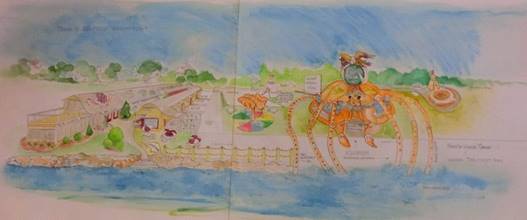
FRED’S WATER CRAB WATER PURIFICATION PARK – (FRED is
a local Artist and member of Glooscap, Larsh & Wolfville Community) his vision is a Water Crab
Tank with glass arm extensions, with a fish aquarium underneath, solar powered,
with Hands Holding a Sparking Blue Plasma Ball with a Silhouette of the Tree of
Life Inside and an Eagle Perched On Top.
REASONS FOR THE WATER CRAB: The Water Crab body has an extremely effective design for filtering
& purifying water.
TEACH:
a) Methods to Identify & Purify Toxic Water, b) Identify &
Protect Ecosystems & Biomes , & Why are
Wetlands Important? c) Economics & How Toxins Happen & How We
Can Fix Them d) Differences
Between Open & Closed Systems, & Modular Design
a)
METHODS TO
IDENTIFY & PURIFY TOXIC WATER:
-
What makes water toxic? Is it good/bad? Why?
-
What causes toxins, and how can we avoid them?
(look at
material life span and reuses possibilities)
-
What can industries do? Why is it difficult to change?
(What are
the Economic Effects of Change? What Physical, Social, Economic & Political
Elements are Involved?)
-
How Waste Water Purification Systems Work
-
Filters / Binders / Chemical Reactions
-
O2 treatments / Bacterial Catalysts / (Human Gut Bacteria)
-
Build Your Own Water Treatment Plant
-
Build Water Boxes
-
Plant toxic absorbent plants on Water Banks
b)
IDENTIFYING
ECOSYSTEMS & BIOMES & HOW WE CAN PROTECT THEM:
Ecosystems & Biomes: Defining & Identifying Change in
animal & plant life, landscapes & habitats from one biome to the next.
Ocean Life,
Ecosystems and Biomes: (Sifting for Shrimp in the Mud Flats. What kinds of plants, animals can
you find? – Scavenger Hunt: Take pictures with phone and bring back to
identify.) How does an arboiteau protect a biome?
Effects of Clear-cutting, Ocean Liner Fisheries & Ocean Mapping.
Migration Patterns: Canadian Geese, Mallard Ducks, Robins,
Chickadees, Eels (travelling up from
southern coastal regions to spawn in Nova Scotia and Europe);
Types of Birds: Eagles, Red Wing Black Birds, Cedar Wax
Wings, Murmurs of Sand Pipers,
Chimney Swifts, Robins, Cardinals, Blue Jays, Chickadees, Yellow Finch, Sparrows, Mourning Doves, Ravens,
Seagulls, Woodpeckers, Canada Geese, Cranes,
etc.
Types of Wildlife: Dragon Flies, Butterflies, Wasps, Bees
(visit Cosman & Widden Honey Farm – Bee Hive tours? ), Otter (at Kentville Miners Marsh)…. (Which ones can you find? Photo scavenger hunts or exploratories.)
What are Wet Lands: How do wetlands work? Why are they important
in water purification?
c)
ECONOMICS OF OCEANS & OCEAN FISHERIES
Seasons: How does employment for the Fishing, Crab
& Lobster Seasons Work.
Why do we have seasons in the industries?
Fishing: What is an Ocean Liner? How Crabs &
Lobsters are Caught (licenses, boundaries,
size & type of catch, identifying crabs & lobster traps and individual weight sizes, designs for crab &
lobster pounds, source marking catches, shipping
and distribution routes.
Fisherman
Schedules: (Eg. High Tide at Halls Harbour)
Logistics of Storage, Shipping, Federal
Paperwork, Storage/Transportation shelf life (canning vs frozen vs live shipments)
How do Ocean
Salmon Farms Work? Why are they good? How can we improve Ocean practices? What do we have to be aware of when
approaching any changes? What would happen if Salmon Farms also grew seaweed in
ocean cages?
d)
DIFFERENCES BETWEEN OPEN & CLOSED SYSTEMS
Open Systems: a material system in which mass
or energy can be lost to or gained from the environment.
Closed Systems: A closed system is a physical system that does not
allow transfer of matter in or out of the system, though, in
different contexts, such as physics, chemistry or engineering, the transfer of
energy is or is not allowed.
Modular Design: subdivides a system into smaller parts or units called modules (like
a Lego block), which can be independently created, modified, replaced, repaired
or exchanged between different systems.
DESIGN & BUILD: Build Your
Own Waste Water
Treatment Facilities; Waterboxes (rafts
filled with toxin absorbing plants. Single or Multi-layer.); Water-bank plant
facilitation.
LOCATION: Could be located at Glooscap Landing
Area. Glooscap
Landing has a lot of space with possible view of water, or Wolfville (Should
be located near a water treatment plant and close to ocean or waterway.)
Handcraft
skills including: Woodworking, Carving, Basket Weaving, Stone & Metal &
Stone Jewelry, Stitching, Knitting & Macramé, Bridge Building, as well as
Music & Singing Lessons, Tie Dye T-Shirts, Drama Lessons. Elder lessons
could be tied in with the craft making and designs.
2)  WOLFVILLE GLOOSCAP/ACADIA BEAVER DAM PARK
(Beaver On Top of
a Dam or In Lake Swimming Toward Dam)
REASONS FOR THE BEAVER DAM: The Beaver is a hard-working
builder & biome creator. The Beaver
adapts and improves its environment, and it is also the national animal icon
for Canada.
TEACH:
a) Methods to
Identify & Purify Toxic Water, b) Identify & Protect Ecosystems
& Biomes , & c) Economics of the Ocean
& Dams & How to Harvest Energy d)
Differences Between Open & Closed Systems
a) WHAT ARE SIDE EFFECTS OF DAMS ON AN
EVIRONMENT? (…even Beaver dams) WHAT METHODS CAN PURIFY TOXIC WATER:
-
What makes water toxic? Is it good/bad? Why?
-
What can industries do? Why is it difficult to change?
-
How Waste Water Purification
Systems Work
-
Filters
-
Adjutives
-
Chemical Reactions / O2 treatments
-
Build Your Own Water Treatment Plant
-
Build Water Boxes
-
Planting toxic absorbent plants on Water Banks
-
b)
IDENTIFYING ECOSYSTEMS & BIOMES & HOW WE CAN
PROTECT THEM:
Ecosystems & Biomes:
Defining & Identifying Change in animal & plant life, landscapes &
habitats from one biome to the next.
Ocean Life and Ecosystems and Biomes: (Sifting For Shrimp In the Mud Flats, What
kinds of plants, animals can you find? – Scavenger Hunt: Take pictures with
phone and bring back to identify.) How
does an arboiteau protect a biome?
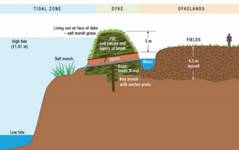
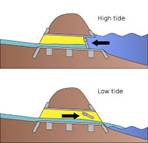
An Arboiteau - a wooden sluice
or aboiteau (plural aboiteaux) is built into the dyke or water
reservoir, with a hinged door (clapper valve) that swings in only one
direction. It swings open at low tide to allow fresh water to drain from the farm land but swings shut at high tide to prevent salt water
from inundating the fields. It also
prevents soil erosion (from the effects of fresh water and salt
water wanting to create a states of equilibrium. This along with the powerful oscillating tide
cycles creates significant disruption on the solidity of the soil. The arboiteau helps
to prevent soil erosion by separating the salt and fresh water, and keeps the biomes separate as
well. This allows farmers to grow hay
and food on the dykes.
Migration Patterns: Canadian Geese, Mallard Ducks, Robins,
Chickadees, Eels (travelling up
from southern coastal regions to spawn in Nova Scotia and Europe);
Types of Birds: Eagles, Red Wing Black Birds, Cedar Wax Wings,
Murmurs of Sand Pipers, Chimney
Swifts, Robins, Cardinals, Blue Jays, Chickadees, Yellow Finch, Sparrows, Mourning Doves, Ravens,
Seagulls, Woodpeckers, Canada Geese, Cranes,
etc.
c)
Types of Wildlife: Fundy Mud Shrimps, Dragon Flies, Butterflies,
Wasps, Bees (visit Cosman & Widden
Honey Farm – Bee Hive tours? ), Otter (at Kentville
Miners Marsh)…. (Which ones can you
find? Photo scavenger hunts or exploratories.)
c)
DIFFERENCES BETWEEN OPEN & CLOSED SYSTEMS
Ocean Life and Ecosystems and Biomes: Define an Ecosystem and Biome. Go take pictures of 3
different biomes around the area.
d)
ECONOMICS OF OCEANS & DAMS & HOW TO HARVEST
ENERGY
How the Lobster are
Caught and Fisherman Schedules (Halls Harbour), How
do Ocean Salmon Farms Work? How
were the dykes better for farming? (They could farm on soil immediately as they
didn’t need to clear out difficult tree stumps & could farm off of highly fertile soils.) How do we produce energy from dams? How much
energy does an average household use? Where are the largest dams in
Canada? How much energy do the dams produce? How many households would that service?
DESIGN & BUILD: Build Your Own Arboiteau (to protect different biomes), or water
dams / waterways with found materials, to transform energy into useable forms
or produce energy and create new biomes. Or build a Beaverdam playhouse to understand
the beaver habitat or build Water boxes rafts filled with toxin
absorbing plants to purify waterways (Single or Multi-layer); Learn about
Water-bank plant facilitation.
Handcraft
and Other Skills including: Woodworking, Carving, Basket Weaving, Stone &
Metal & Stone Jewelry, Stitching, Knitting & Macramé, Bridge Building,
as well as Music (What frequencies heal our bodies?) & Singing Lessons
(Music and Vibrations – seeing sound patterns on paper. Why is singing so important?
How we breathe. What does breathing do
to our bodies? How can it stop us from
being angry or scared? How can it make us Happy? Relaxed? More Alert? Tired? or
Focused? ), Tie Dye T-Shirts, Theatre & Drama
Lessons (Empathy – How do the characters feel? What does the story
communicate?). Elder lessons could be tied in with the craft making and
designs.
LOCATION: If
located in Wolfville, it could complement the Acadian Dykes theme – arboiteau,
Energy, BIOMES
(Emphasis on transition from Saltwater to Freshwater Biomes, and Mud Shrimps and Ocean Life Ecosystems)
The
Wolfville
location could have multiple interest groups
participate, including:
Eg. Glooscap (The Sleeping Giant on the Bay of
Fundy & Cape Split - Stories & Ways / Grounds to hold Pow Wows), Acadia
University (Tidal Power), Acadians (Arbioteau,
farming practices & music), Planters (Describe ways of weaving and
music), Farmers (visit a farm, apple grove, vineyard or dairy), Wolfville
Community (visit the businesses & their owners), Larsh
(meet a very special member of the community)
(Scavenger Hunt Challenge: Which ones can you find? Photo scavenger hunts or exploratories. T-Shirt Prizes – Everyone in the
park/town greets the T-Shirt wearers with noticeable courtesy.)
3)
BEAR RIVER TREES & WATER FALLS
PARK
(Bear River has larger rock formation
landscapes for a Water Fall with Mist & Trees for Air Purification; The
Waterfalls would fall into a pond. Mist
would be created on the lake surface, and a rainbow could be produced with
lasers. A statue of a bear could be made to stand on the side of the falls, and
rope bridge go over the top of the falls, or under the falls, or in the front
of the falls, whichever is workable and safe.
Teach: Energy Production and Use; Methods
to Purify Air with ionization, plants, etc.; Building Bridges, using ropes,
sticks & Connecting with other living things by Building Social Bridges.)
REASONS FOR THE
TREES & WATERFALLS:
(The trees and waterfalls both purify the air. If we learn how, it will
create greater respect and wonder for nature.)
TEACH: a) Methods to Identify & Purify Toxic Air
b) Protect Ecosystems & Biomes
c) Economics of the Forests & Power Dams
& How to Harvest Energy d) How/Why Bridges are Built & Different
Types of Bridges (Social and Physical) e) Differences Between
Open & Closed Systems
a)
METHODS TO PURIFY TOXIC AIR:
-
What makes air toxic? Is it good/bad? Why?
-
What can industries do? Why is it difficult to change?
-
How Air Pollution Purification Systems Work
-
Filters
-
Adjutives
-
Chemical Reactions / O2 treatments
-
Build Your Own Air Purification System
-
Building Water Boxes for Fresh water
-
Planting toxic absorbent plants on Water Banks
b)
IDENTIFYING ECOSYSTEMS & BIOMES & HOW WE CAN
PROTECT THEM:
Ecosystems & Biomes:
Defining & Identifying Change in animal & plant life, landscapes &
habitats from one biome to the next. How
do bridges affect biomes? How do bridges
affect change? How can bridges help our
world?
Fresh Water Life and Ecosystems and Biomes: (Looking for qualities of a biome. What kinds of plants, animals can you find? –
Scavenger Hunt: Take pictures with phone and bring back to identify.) What protects a biome?
Migration Patterns: Canadian Geese, Mallard Ducks, Robins,
Chickadees, fish (SALMON?)
Seasonal Pattern: Why do
bears hibernate? What are the life cycle changes of
frogs, butterflies (difference between a butterfly & a moth?), black flies,
mosquitoes …others.
Types of Birds: Eagles, Red Wing Black Birds, Cedar Wax Wings,
Robins, Cardinals, Blue Jays, Chickadees, Sparrows, Ravens, Seagulls,
Woodpeckers, Canada Geese, Cranes, etc.
Types of Habitats: Trees, sand, rocks and moss growth, water
ways, wetland marshes, … (Which ones can you find? What animals live in the biome you found?
Photo scavenger hunts or exploratories. T-Shirt
Prizes – Everyone in the park/town greets the T-Shirt wearers with
noticeable courtesy.)
Types of Wildlife: Frogs, turtles, bears, foxes, worms, water
bugs, dragon flies, butterflies, wasps, bees, ants, ferns, daisies, clover, grass, …
(Which ones can you
find? Photo scavenger hunts or exploratories. T-Shirt Prizes – Everyone in the
park/town greets the T-Shirt wearers with noticeable courtesy.)
c)
ECONOMICS OF RIVERS & DAMS & WATERFALLS, &
HOW TO HARVEST ENERGY
How many dams are in
Canada? What are the largest ones? Are
they all designed the same? Which types
of turbines do they use? What potential
environmental (mercury leaching from rocks with higher acid levels of rotting
trees?), biomes, or habitat risks are associated with dams? How can we prevent
issues & should we try to prevent these issues? Why? Why not? How long have
these dams been in Canada? How much energy do they produce? How many jobs do they produce? How do
electric circuits work? Can we get an
electric current from the ground? How? How does water produce energy? Are there
differences between the soil types around the water at the top of a water fall
vs. the bottom of a waterfall? Is there a difference in the water at the top of
the waterfall vs at the bottom of the waterfall? Why? How much energy do we need to charge a
phone? … a light bulb?
d)
DIFFERENCES BETWEEN OPEN & CLOSED SYSTEMS
River Life, Ecosystems and Biomes: River animals and plants make up a large wildlife
biome. What kinds of plants &
animals can you find? How is a river biome different than a forest biome?
– Scavenger Hunt: Take pictures with phone and bring back to identify
different biomes. How does a: squirrel
live in a tree? ..salamander under a rock? ..turtle in the water, ...rabbit in the grasslands?
DESIGN & BUILD: Build Your Own rope bridge or 12 stick
bridge. Build waterfall turbines, dams / waterways with
found materials, to transform energy into useable forms or produce energy to
charge your phone, or light a light bulb. What difference do different shapes of the
blades make? Can we learn anything from
nature when we design turbines? What is the difference between an impeller and
a propeller? Create a new miniature biome. Or build water box rafts filled with toxin absorbing plants to purify air and
waterways (Single or Multi-layer); plant toxin absorbent cat tail plants along
the riverbank.
Handcraft skills
including: Woodwork, Basket Weaving, Stone & Metal Jewelry, Stitching,
Knitting & macramé, bridge building, as well as Music & Singing
Lessons, Tie Dye T-Shirts, Drama Lessons.
LOCATION: If
located in Bear River, the larger rocks and dam already exist there. There are a lot of natural wild
life and fresh water biomes to study.
4)
PORCUPINE PARK (Focus on Material Properties & Designs and Concept
Solutions Inspired By Nature – Eg. Metal vs. Wood for
construction; Velcro designed from Burdock burrs; Teach porcupine quill design
artwork? Basic material properties and how they work together. Demonstrate some more sophisticated chemical
properties of chosen materials. Look for materials within nature. How can these properties work best in
design?)
REASONS FOR THE PORCUPINE: (The Porcupine is a VERY unique animal.
It also has a very odd and unique way of protecting itself. It also has a VERY unique
coat. What can we learn from the
Porcupine quill? What material
properties does it have? Is it hollow or
solid? Is it soft or rough? Is it weak or strong? How can the shape be useful?
How can the chemical makeup be useful?
How is it useful to the Porcupine?
What can it teach us about other materials found in nature?)
TEACH: a) Methods to Identify Different Material
Properties and Consideration in Design and Manufacturing; Material Life Spans b)
Protect Ecosystems & Biomes by Selecting The
Correct Types of Materials & Disposing of Them Responsibly After Product
Life Cycle
c) Economics of the Materials and How Will
They Be A VERY Important Part of Our Future?
d) What Materials do humans need to live? e) Differences
Between Open & Closed Systems
a) METHODS TO IDENTIFY DIFFERENT MATERIAL PROPERTIES & CONSIDERATION IN
DESIGNB & MANUFACUTING; MATERIAL LIFE SPAN & DISPOSAL: Where
do “MATERIALS” COME FROM? Where do they GO? What can they DO?
What does nature use to make things strong,
bendy, sticky, smelly, rough, smooth, sharp, pointy?
What makes the same MATERIAL good for one job but bad for another
job? How do MATERIALS affect Design?
What makes animals move fast through water,
fast in the air? How do they bounce,
run, swim, fly? What makes them move or react the way they do?
MATERIALS – Inspired by Nature. What is special
about the ratio 1.618 (the golden rectangle?) SO IMPORTANT? Can you find something from nature and try to
make a material act the way it does?
Eg. Velcro designed from Burdock burrs; Teach
porcupine quill design artwork?)
b) HOW TO
PROTECT ECOSYSTEMS & BIOMES BY SELECTING THE BEST MATERIALS FOR THE DESIGN
& REPURPOSING THEM RESPONSIBLY AFTER THE PRODUCT LIFE CYCLE: What is a Material? Is it found or is it
made? Can a found material be made chemically in a lab? What is Waste? How do
we define Waste? Why do we call it Waste? What is unreasonable about
Waste? How could we eliminate
waste?
Does a product create ‘WASTE’ or Further
Usable Products? What happens to the MATERIAL after the product is no
longer useful in its current state?
What is a Closed System? What are
some New Materials Today that did not exist on the market 5 years ago? (Eg. Mycelium – mushroom & fungus, Coconut or Banana:
plastics, leathers, paper, cements; carbon glass – as strong as steel; fish
scale transparent plastic like stretch and seal; …others)
c) ECONOMICS OF MATERIALS, & HOW THEY
WILL BE A VERY IMPORTANT PART OF OUR FUTURE:
What is 3D Printing? How Could Things Be Made In
The Future Differently than they are today? How does 3D Printing Work? Can You 3D Print living material? Can you build living things?
How does Splicing work? How do frequencies affect materials? Why is the
frequency 7.83 Hz SO IMPORTANT in nature and to living things?
d) WHAT MATERIALS DO HUMANS NEED TO LIVE? How
do our practices & habits affect the biomes around us? How could we reduce
the affect we have on biomes around us? Is there a way that we could create a
closed system unit to live by? What is the Modular Closed Unit System Concept?
e) Differences Between Open &
Closed Systems; and Modular Designs
DESIGN & BUILD: Build
crafts using porcupine quills? Create a design project and try to build it
using the found materials. Why did you choose the materials you used? Build a bridge out of spaghetti. What happens
if you tie strands of spaghetti together? Can you break a bundle of 20
spaghetti sticks tied together? What if you twist them before you try to break
them? What is the difference? Can you
make a step or a chair that can hold you up using a flat piece of cardboard? What
did you do to make it work? How do you make carpenter’s glue? What happens if you glue two sticks together
with carpenter’s glue and let it dry? What if you use a clamp to tightly hold
it together as it dries? (Compare the two samples) What happens when you try to
break the two sets of glued sticks? 4 sets? 8 sets? 16 sets?
What happens if you try to lift a heavy
object with a string? What happens if you try again winding three pieces of the same string?
What happens if you use one pully? What happens if you use 4 pullies? Why do you think this is? If a building is
tall, is it safer to be stiff or bendy? Why? What is the difference between
cement, cement with horse hair, or cement with steel
rods going through it? How are these
different? What difference did it make in building properties and possible
shapes? (Eg. Arches were possible after rebar metal
pipes were added to concrete)
LOCATION: (Open Location)
It would be good if the location had porcupine biome.
5)
RAINBOW PARK (Teach: Medicines
Found In Nature)
REASONS FOR THE RAINBOW: The Rainbow is a spiritual sign
of a special agreement with the creator. It is hopeful. It is radiant. The park could have a mist with lights
shining on it to make a rainbow at the park entrance.
TEACH: Ways of healing in nature. What are the ways that we can work with the
nature within our bodies and outside of our bodies.
What is special about the healing frequencies: 7.83 Hz, 435 Hz, and 528 Hz?
Where are these found in Nature? What makes things sick? What keeps things
healthy? What is balance? What medicines are found around us? (Light, clean
air, clean water, sound or frequency, good nutrition, rest, connection) What
happens if one of these is missing or in excess? in plants? In animals? In
humans? What happens to biomes as they become more complex with a larger number
of connections? What happens to people if one of these elements is missing?
DESIGN & BUILD:
Light: What
does it feel like to wear a blind fold for 15 minutes? Think of someone who has
is blind and has to live without seeing all of the
time. Remember this when you meet them
and remember how strong they are for coping with it. Remember to be glad you
can see well.
Clean air: How long
can you hold your breath? What happens
after a long time? How do your lungs feel? How does your throat feel? Is your
heart beating faster? What does it feel like to walk into a smoky room? (Have a
tent full of smoke for them to walk through?)
Do you know anyone who has a bad cough or difficulty breathing? If they have to live this way all of the time, will it be difficult
to walk and move? Go upstairs or across a large grocery store? Remember this
when you meet them and remember how strong they are for coping with it. Remember to be glad you can breathe easily.
Clean water: Offer
them a glass of water with iron or something bitter in it? Show pictures of
places in the world where they do not have clean water to drink. What could
help these places? Remember to be glad you have clean water.
Sound or Frequency: What
shape do 7.83, 435 or 528 frequencies make on a piece of paper? Build a clay
sculpture and direct a frequency at it.
What happens? Dance on a bed of damp clay, what happens to it? What % of our bodies consist of water? How do
you think vibrations affect our heart? Our brains? Our vision? Our hearing?
What do the sounds of birds make you feel like? What does loud banging make you
feel like? Why might it be important for us to sing?
Nutrition & Rest: Skip supper & stay awake all night and
see how it feels the next day. How do
your eyes work? How does your hearing work? How does your breathing work? Do
you feel irritable or frustrated? What happens when you try to run fast? Can you run as fast as you usually do?
Connection: Try to
go without talking for as long as you can.
See how you feel. Are you
frustrated about how difficult it is to interact with others? When you cannot
share your thoughts? Think of someone
who has had a stroke and has to live without speaking
all of the time. Remember this when you
meet them and remember how strong they are for coping with it. ALWAYS Remember to be glad that you can talk
and read and write and draw and smile.
We are so VERY fortunate.
LOCATION: (Open Location)
6)
KEJIMEKUJIK
GLOOSCAP TURTLE, BEAVER
& SEA OTTER PARK
(Teach:
DOWN TO EARTH – Moving With Nature: Canoing, Kyaking, Bicycling,
Hiking, Walking, The Sacred Fire & Sweat Lodge)
REASONS FOR THE GLOOSCAP TURTLE, BEAVER
& SEA OTTER: (The Turtle, Beaver and Sea Otter
are already in their natural environments at Kejimekujik
Park, and there are Mic Maw creation stories that revolve around Glooscap and these select animals. This would focus on
giving families a chance to Experience Activite
Living, and Quiet Observation, As Part of Nature.)
TEACH: How To: Listen, Watch &
Respect Self, Others & Nature;
How To: Canoe & Kyak, Bicycle, Hike
Glooscap
Stories, Seasons & Astronomy
DESIGN & BUILD: a Tee Pee or Wig Wam,
model sized canoes, dream catchers – describe how materials are found and reuse
a prepared set of materials to build the structure, (build a Canoe?), (make
clothing & Mocassins out of mycelium leather?).
Cook food found in nature over a fire (food can be brought in, but it would be
described how the foods are found – nature walk)?
LOCATION: Kejimekujik Park,
NS
7)
DEER ISLAND
TRAILS, BUTTERFLY PARK (Teach:
Cycles of Life. Life and Death Adaptation Perception, Solution Oriented Problem
Solving ~ What Do Life & Death Mean To You? What
is Time? The History of the Harvest & Hunt and why we should Respect and
Cherish our food source and the Gift of Life.)
PERHAPS AN ELDER SHOULD WRITE THIS ONE?
REASONS
FOR THE DEER, BUTTERFLY: (The Deer
are icons of food from nature. They are
gentle, beautiful, and giving. They have
been the focus of the hunt for many centuries. The butterfly represents change
and moving through stages of development to progress into something beautiful.)
TEACH: Cycles of Life. Life and Death.
Perspective & Solution Oriented Problem Solving. ~ What Do Life & Death Mean To You? The History of the Harvest & Hunt and why we
should Respect and Cherish our food source and the Gift of Life.
Do
you know anyone who has had a baby? Have you ever held a baby? ..a puppy? ..a kitten? What did it feel like?
As
humans what does it mean to be alive? Do animals live forever? Do humans? How
long do mosquitoes live? How long do deer live? How long does an elephant live?
How long do humans live?
How
do we see the world? Does Heart Rate affect how we see things? Why do things
slow down when someone is in an accident?
What does a bird’s song sound like when it is slowed down? (a jazz solo?) How long does
it feel for a house fly as it sees your hand coming down before it flies away?
How
do previous experiences affect how we see/experience things? (relative temp.
hot & cold and luke-warm tubs. Place one hand in
hot water and then medium, and the other in cold and then medium temperatures. How is it that the same tub can feel both hot
and cold at the same time?
What
would it be like if we lived forever?
Would it be important to do something quickly if we never ran out of
time? Does running out of time make things more valuable? More important
because we might not be able to go back?
Do
you know anyone that has died? What did you feel like when you were told or
found out about them dying? How did it change the way you see or experience
things? What questions did you think?
What reminds you of them today? What did they like? What things did they like
to do? How does it make you feel when you remember the good things about
them? What do you think would make them
happy if they could see you doing it today?
How
can changing the picture frame that we look through,
change how we feel about things? If our foot is hit by a hammer it hurts; and if our friend intentionally drops it on
our foot it hurts more; but if it hits
our foot after it hit our friend on the head, then it hurts less since we are
really concerned for the wellbeing of our friend.
Perception
is often relative to the meaning we give to it.
By using this to better understand our reactions to the world around us,
we can focus better on how we respond to things. Breathing deeply can help to slow things
down, and allow you time to consider events, how they were initiated, where
they could go, and what you can do and might hope for.
When
painful things happen, we can remember that they won’t last forever, that they
are only moments in time, and they will pass. And, when beautiful things
happen, we can focus deeply and try to appreciate and enjoy each
and every detail and second so that we can recall these beautiful
moments as resources to help us. When we have painful times, we can better cope
with challenges by remember joyful moments.
DESIGN
& BUILD:
Projects
with Time, Growth and Flight.
TIME: What makes times special? How many minutes long is an average life? How
many years is that? How many months is that? How many days is that? How many
hours is that? Why is time valuable?
What
are the top 10 things you would like to do in your life in order of
importance? Write them down, but don’t
show them to anyone. Think in detail about what they would look like to actually happen. How
would they make you feel? How would
others around you feel?
Now
take the first one and write down the steps that would be needed to make it ACTUALLY happen.
These should be specific steps, not general. (Eg. I want to take
a trip, so I need to: 1. Save some money 2. Save some vacation time 3. Get a
Passport 4. Get a Visa and any vaccinations 5. Buy a Plane Ticket 6. Buy
Luggage 7. Book a Hotel & Events 7. Call a Taxi 8. Get through the Airport
and on the Plane 9. Get to the Hotel 10. Enjoy the Trip!) Now plan how you will do ONLY step ONE. After
you have completed step one complete step TWO.
…You get the idea.
Remember: How
long does the average person live? …So start planning.
Take
one of the big items on your list of things you would like to do. Eg. Read the Encyclopedia Britannica from end to end.
Figure out how many pages are in the full collection. When would you like to have it read by? Divide the number of page
by the number of days in your time frame. Divide that number by the number of
hours in a day. This gives you an idea
about how many pages/day or pages/hour you would need to read.
If
you commit 5 min/day to a task and do it regularly every day, that is 35
minutes/week and 150.5 min/month or 2.5hours/month. Bump that up to 15 min/day and that is 7.5
hours/month. Over a year that is 87 hours. A university course is only 30 hours
of in-class lectures. 87 hours is enough time for a class and homework time for
two classes.
Think
of how much you can read if you carry a book with you and open it when you’re
waiting in line at the grocery store, or for the bus to arrive. It could add up
to 10-27 min/day (9 min/day = 1 hour/week) or (27 min/day x 7 days = 180
min/week = 3 hours/week : a university course has 3
hours of lectures/week.)
GROWTH:
Lessons from a bacteria culture plate.
(Start and grow a bacteria culture plate for the week.)
What
is Exponential growth: (Eg. What would you rather
have, $1,000,000 or double a penny every day for one month? What does that look
like on a graph? What does this look like beside adding a penny every day for
one month?)
The
Effect Direction has on growth. With
every choice we make, we bring new influences into our lives. This can have a significant impact on our
life overall.
TEST:
Draw a line on a paper. Draw a 2nd line that is at just a slightly
different angle. When you extend the
line to the end of the page, there may only be a difference of an inch or
two. But if you take a pin and tie two
strings (12 ft) and have two people walk away from the pin along the angle, we
can see what a significant difference there is in the final
outcome. So
it is with the walk that we choose.
Small changes may seem insignificant at first, but over time, they will
add up into a very significant difference.
Even 10 minutes a day towards a specific goal (eg.
Reading a specific book. Have everyone
read one page and time themselves.) if added up over one week is 70 minutes,
and over one month is 301 minutes or 5 hours.
If
we are focused on where we want to go, and what we want to do, we can make a
very significant impact on ourselves, the world and people around us (because
they can see what is possible for them too), especially if we prepare ourselves
to meet the expected challenges along the way.
What are some possible challenges that would be on the way to your goal
that you could start preparing for today?
FLIGHT: The Butterfly: How
is its change graceful and how can we learn from it?
1. The busy caterpillar – eats enough to sustain
the butterfly through the cocoon stage.
Like the caterpillar, we can prepare in advance for opportunities that
may present themselves.
2. The dark stage – even though there may be
times that are dark, where we may not be able to see things around us clearly,
we can take time and prepare, knowing that everything is always for a period of time. A
child crying with cholic over days may feel like it will be this way for the
next 50 years, but they will likely outgrow it after one week or maybe a month,
or maybe a year. But we must learn
patience. When we are frustrated with
the speed of things around us, we must learn to stop and take the opportunity
to breathe. (Exercises in patience: eg. wait by the canoes for one hour or two hours before the
paddles are ready to go out. One can complain, or one can find other useful
things to do – study environment, talk to others around you and learn from
their past experiences, build something with the sticks/sand and stones, think
and plan about your next project, or week ahead etc.)
3. The Stage of Flight – We may have the
knowledge prepared for our new stage, but we must also have the courage to jump
into the new beginning, and we must be open to a new understanding of how the
world works around us in this new stage.
(Child vs Adult vs Elder, Employee vs Business Owner, etc. How can we
practice being ready? - We can imagine
what it would be like. We can ask others who are currently in the different
stages, so that we can learn from their experiences. We can challenge ourselves
by regularly standing up to and facing small daily fears we may experience (eg. Try talking to the spider instead of jumping back. - Did the spider ask to be born a
spider? Where does the spider’s
important tasks fit into the broader web of the ecosystem?) We can also
pretend, find ways to live out similar roles or volunteer for similar roles,
and play around the activities of the different stages. (Eg.
If you wish to be a teacher, you might try to get a job as a camp counsellor
first?)
4. The Stage for Reflection – Why is reflection
important? How do you reflect? How is personal reflection different than
reflecting with others?
DESIGN PROJECT: Flight - What makes something fly? What are the different ways things can be
made airborne? Which methods go the
highest the fastest, last the longest time in air, are the most practical for
which purposes? What is special about
how the butterfly flies? What about how birds fly? What makes their wings work? What can we learn from them? Try to build something that flies. (Eg. Tube airplanes, different design airplanes. Build a
bird feather. How does it feel to fly?
(Bungy jumping? Boat rides where you can perch yourself at the front of the
boat? Have a tether belt above a trampoline? …or just have the children take
turns on a trampoline or bouncy house.)
LOCATION: LOCATION: (Open Location)
8) SPIDER & OCTOPUS PARK
(Teach:
Listening skills and Super Heroes. Why is ACTIVE LISTENING the most important
skill? What are frequencies? How do the Eel, Octopus & Penguins
reproduce? What makes them strong? Why are they Special SUPERHEROES?)
REASON FOR SPIDER: The
spider’s life cycle. How does the spider
catch its food? How does the spider spin
a web? How strong is a spider’s thread?
Is the thread sticky? What makes an insect stay in the web? What allows a
spider to walk across its own web? Can
it walk across a different web than its own? What happens to the web design
pattern if the spider is under different influences (eg. Caffeine) and why we should be aware of how
things we consume affect us. What is the purpose of a spider web? Are we sure that this is the only purpose for
the web? What other purposes might the
spider web have?
What is a dream catcher? What are the history & stories of the dream catcher?
TEACH: The
selfless life of the spider and octopus for their children. How a spider works
so hard to prepare safe and thriving environments for the babies that they will
never see. (read/movie Charolette’s Web? / My octopus
Teacher) What kinds of spiders are there? What are their habitats? Where do
they fit into the food chain? Why are
they important?
What are the qualities of the octopus that allow it to create such
fascinating camouflage that include both colour and texture at the precise time
it moves over a new environmental back ground. Other than camouflage, how does an octopus
protect itself from predators in the ocean? How do octopus sense their
environments? What role does frequency play in the functions of an octopus`
perceptions and reactions?
DESIGN PROJECTS - Sound Waves and Dream Catchers
Study physical representations of sound on paper. Consider how sound waves work and what makes
a sound receiver work? How does it work?
Look at digital and analogue sound, & electronics of sound receivers and
understand how they are currently made.
Design your own radio transmission and receiver that can change
frequencies.
How did the first radio work? How
did the first telephones work? (pictures of the people manning the communities
shared phone jack systems.) How do
radios work today? How do cell phones work today? What is the difference
between 4G and 5G?
What is a Dream Catcher? How does
it work? How are they made? Design your own dream catcher.
LOCATION: LOCATION: (Open Location)
9) EEL & PENGUIN PARK (Teach:
Caring & What It Means – Going the Extra Mile & Can You Make Someone
Smile?) STILL WORKING ON THIS ONE
REASON FOR EELS, PUFFINS & PENGUIN: The
Eel, Puffins & Penguin travel excruciatingly long distances and awkward
places to have their children. They go
through very difficult processes to get to these places so that their eggs can
hatch successfully, and babies can live long enough to go to their natural
habitats. Eels start off around Florida
and then swim all the way up the eastern coast of North America splitting into
two directions around New York. Half of
the eels come up through Hansport, and the other half
go up to Europe to lay their eggs in fresh water. These are the only two locations in the world
that they lay their eggs. Puffins climb up precariously high cliffs and lay
their eggs along the ocean front in rock crevices. A big part of nesting for the penguins
involves standing on the eggs to keep them warm enough, even during intense
winds and low temperatures. The community of penguins take turns sanding along
the outside of the circle to absorb the worst of the weather, and there is
constant shuffling around as they share the burden together. This whole process
involves great amounts of endurance, perseverance and teamwork.
TEACH: The
PERSEVERANCE of the EEL & the TEAMWORK of the Puffins & PENGUIN for the
lives of their children. How do they get to the places where they lay their
eggs? What are the barriers they
face? Why do they do this? How are Humans similar in how much they care
for their children? Why is it so
important to Care and to Show that We Care? (Epigenetics & How Environment
affects the expression of genes.)
DESIGN PROJECTS - Personal Challenges
Study the difference on how you feel when you take on a difficult
challenge and succeed vs a simple challenge and succeed. Set up progressively more difficult and
longer challenges that require endurance and persistence. These can be marathons in any form (eg. Kayaking, running, biking, swimming, sit ups) to length
of time and amount of care put into a craft or drawing, requiring great degrees
of patience and focus, staying awake for extended length of time, fasting for
periods, eating harsh tasting foods, memorizing text or birthdates for family
& friends. All of
these activities should be measuring success based on personal previous
attempts and trying to exceed previous personal bests.
LOCATION: St. John’s Newfoundland or Hantsport? (Open
Location)
10)
SANDPIPERS &
MINNOWS: Strength in
Teams, and How To Develop Strong Teams. What Can We
Learn From an Animal Murmur and Who Directs Their
Pods?
(Teach:
How and When to Be a Leader. Why are Leaders Important? What does Leadership
Require? What is Empathy? What does it mean to Care for Others? Why do
people follow other people? Who do you follow?
Why? Who do your friends follow? Why?)
STILL WORKING ON THIS ONE
REASON FOR SANDPIPER & MINNOWS: The
Sandpipers & Minnows travel in groups for protection and to encourage each
other. If you watch the movements of a
murmur of animals, you will notice that there is not just one bird or fish that
leads the group. How do they know which
one to follow? Who is teaching and who is learning? Why do you think they have
adapted to use this form of co-ordinated motion? What are the
strength of a murmur group? What is the role of a facilitator? (Soccer game analogy: If the team knows the strengths of each
player, then they know who to follow when those qualities are required. If
everyone on the team practices together and is constantly observing and sensing
everything around them, it allows the team to act dynamically in a co-ordinated
way, as one unit, while responding to new and unexpected challenges or
environments.)
TEACH:
A.
PARTS OF TEAM DYNAMICS - Remember ``It takes a good follower to
become a good leader, and good leaders put others 1st.``
Team Members Should: Show up & try to be early;
Know your responsibilities; Know your strengths and weaknesses and those of
your teammates; Continually challenge yourself & your team to improve; Try
your best – plus 10; Teach others interested in what you are doing; Learn from
others; Complement & encourage your teammates; Know the other teams’
strengths and weaknesses & adapt your team’s playing positions &
styles; When the other team plays dirty, don’t let them distract you from the
goal, get even by playing harder and winning the game – lead by example; &
Share the win with your teammates and the other team – it is great to be able
to learn from each other.
What is a Facilitator: A facilitator is the pointer in the group that
creates an order process to allows actions or speach
to be taken by one person at a time.
FACILITATING SKILLS DEVELOPMENT: Teams
at work, when learning and at play – sports. Take turns facilitating different
parts of a soccer practice for a soccer team. Eg.
Read or watch a specialist and then teach it to others: run a set of warm-ups,
drills, exercises and scrimmage. 15 minutes each.
Facilitating: A facilitator is simply a co-ordinating element for a group. It does not require knowledge or experience,
but it does require observation skills and some judgement abilities for
prioritization and crowd. If you lack
observation skills or judgement, find someone to work with.
In an emergency, people panic if they don’t know what is going on and
there is no plan or
way to respond and take action.
If a facilitator steps up, it creates order and prevents panic and chaos
(which can lead to violence) from taking over.
It helps to create order and a return to calmness, thoughtfulness &
reasonable actions? Anyone can be a
facilitator, even you.
How can YOU respond to an emergency situation
when there is no one else stepping up to take control of the situation, or how
you can step up and become a Facilitator?
STEPS:
1. First get 4-5 large sheets of paper and tape
them on the wall (visible to all participants) or have someone get some paper
and be ready to record information discussed, as well as get names and contact
info.
2. Create attention with a loud whistle or bang
and shout “Attention! “, to get people quiet and listening. If your voice is
not very loud, find someone with a strong voice and have them echo these steps
for you.
3. Identify or ask for all people with strong
skill sets in the group to step forward (These “specialists” will be your core
group.) Eg.“Who is experienced or
somewhat skilled in this field or any field?”
“Are there any Specialists here?”
4. Ask group, “What do we think caused this
event? “
5. What is broken or not working properly
because of this event? (write headers on large pages)
6. What do we think needs to happen in order to
fix this? (write
under each header)
7. What are the detailed tasks or products
needed to fix this?
8. Who has the skill sets to do these tasks or
make/find the products needed to fix this?
9. Delegate the tasks to each of the
specialists based on their strengths.
10.
Ask specialists to form teams of helpers from the group, for each of the tasks
that need to be completed. Ask if there are any required materials that the
rest of the group can help source.
11.
Have each specialist write team members names and contact info on large page or
give to record keeper.
12.
Arrange for a follow-up time to meet with the core group to synthesize the
new-found information or progress towards the solution.
13.
*Important: Have each member of the core group REPORT all
progress back to the larger group at an agreed upon frequent & regular
basis. Eg. Every ½ hour or hour.
14.
Invite questions or suggestions from larger group after breakout. Direct questions or suggestions to specialists.
15.
Start planning budgeting of materials or supply chains if necessary.
16.
At the end of each follow-up presentation, ask for feedback or questions and
then repeat steps 4-9 as necessary
17.
Try to make sure that everyone that wants to help is doing something, even if
it is simply finding a way to keep others busy or entertained. Eg. Have someone take an attendance of everyone present,
have a team to go around and check on people to see what they need, have people
find materials or resources, get more information about what happened in
surrounding areas, have older kids organize games for younger kids, get people
making snacks, or creating helpful written materials. You can ask others for ideas about what needs
to be done and then ask who wants to do the less urgent tasks.
18.
Celebrate milestones achieved with the teams and the larger group. Give lots of
recognition as tasks are completed.
19.
If event continues over prolonged periods of time, have specialists start
training sub-team members in core required skills.
20.
If someone else steps up to facilitate, support their efforts, and try to
remind them if they forget or miss any of these steps. A good leader knows how to follow.
Discuss the role of the `THE TALKING STICK`. How does it work? Where and When is it used?
B.
Elements of movement & gravity, and how they interact. What ways does gravity affect movement and
what makes a motion smooth? (demonstrate concept of gravity with cartesian x,y,z axis using SCRATCH computer
game development … eg. “ Forever
y= -1 = gravity; Forever x = +.5 =
smooth ride.. why? “).
How do murmurs not collide with their teammates? How do they Loop?
Curve? Or Dive? What are the laws of
thermodynamics? Examples… drains, water flow, creating turbulent motions with
different fluid mass types.
DESIGN PROJECTS - MOVEMENT
Observing motion. 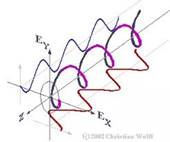
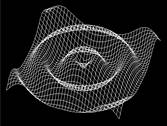
What are the elements of 3D sinusoidal images in flight or underwater
movements? How do they work? What formulas increase the wave motion and which
ones decrease it? Which are the most energy efficient movements, or which waves
move the farthest with the least amount of energy?
How can these shapes represent space and time? How can they represent
sound or light?
How can we learn from murmurs and apply these ideas to other things?
(study wind: speaking or whistling into a fan, or using paper taped to a fan
when run at different speeds?
Using glass containers or cups, play with food colouring, ice, cream,
coffee jello, oil & water to demonstrate
different effects on motion and fluidity of different materials at different
temperatures– thermo & fluid dynamics
How do we see 2D? 3D? 4D? Can you imagine what 11D would look like? Try to describe it.
LOCATION: (Open Location)
These AWARENESS PARK
Themes are just some examples. Many local animal themes could be created for
any communities wishing to participate.
11) EAGLE & The Crack of the Fire: Leadership
and What It Means & The Crack of the Fire = Pure Energy (What makes Fire?
What is Energy? What are Charcoal’S purification
properties?)
(Teach:
Why are Leaders Important? What does Leadership Require? What is Empathy? What does it mean to Care for Others? Why do
people follow other people? Who do you follow?
Why? Who do your friends follow? Why?)
STILL WORKING ON THIS ONE
REASON FOR THE EAGLE & Crack of the Fire: The
Eagle has Perspective and can See a Far Distance; it has Strength and Acts
Quickly & Precisely. It is the great
observer and communicator. It has full control over its large massive body.
Likewise, fire can move fast and over massive spans. What are the properties of fire? Why is Fire so important? What is it like if fire is burning out of
control? How does it make you feel? How
can we use fire responsibly? How does it make you feel? Is fire a living thing?
Why?
TEACH: Elements of flight, gravity and how they
interact. What is gravity and what makes
a ride smooth? (demonstrate concept of gravity with cartesian x,y,z axis using SCRATCH computer
game development … eg. “ Forever
y= -1 = gravity; Forever x = +.5 =
smooth ride.. why? “). What makes an
airplane go fast/slow? Loop? Curve? Or Dive?
DESIGN PROJECTS - FLIGHT
Observing the Eagle feather. What are the elements of flight? How does
it work? How can we learn from it and apply it to other things? (Paper
airplanes, paper lanterns, car designs, boat designs, house designs, turbines)
LOCATION: LOCATION: (Open Location)
12) TURTLE POND: An exciting walk through the bright colourful trail.
(Teach:
Taking time to walk after the sun has gone to sleep for the day.)
REASON FOR THE Turtle and Globe: The
turtle is old and thoughtful. It does
not judge too quickly. When it is
uncertain it stops, balances and considers things before it moves. The turtle pond up on the hill consists of a
turtle lamp with a globe on its back that is about 8 feet tall,
and reaches up from the centre of the oval pond. Surrounding the outside of the oval pond are
stones that light up in the shape of a fish.
Inside of the pond there is an otter, a beaver and a frog, that also
light up at night with solar power.
Around the turtle pond are native trees (birch, cedar, maple, pine,
oak). These trees have little solar
powered animals, like birds or squirrels, perched in their branches, and a
little rabbit and skunk and maybe a snail hiding in the grass, that all light
up at night. The path has solar ground
lights that lead the way down the trail. There are hollow driftwood sculptures
of a moose and a wolf that have other animal figures that light up inside of
them and show through the crevices of the driftwood. There is a solid sculpture of a bear that has
little animals carved in it that are also lit up.
TEACH: Taking time to listen, think and reflect
about the day, the week and the year. To
be reminded to wonder and enjoy the present.
To take time with friends and family.
DESIGN PROJECTS - ACTIVE
LISTENING, ACTIVE OBSERVING, ACTIVE REFLECTING, BREATHING, MEDITATION,
STRETCHING
Active Listening: What does it mean to listen?
When you listen, are you thinking about other things than what the
speaker is telling you? How can you
focus on what they are trying to tell you and then confirm to the speaker that
they are being understood? Questioning what you are uncertain about or do not
understand, shows the person that you care about what they are saying.
Active Observing: What does it mean to observe?
How do we put meaning on the things that we see? Where does one object
stop and the next one start? Memory games using narrative and creativity, to
improve recall.
Active Reflecting: Are the things presented in front of you what they seem? What is the narrative or story that is given?
Are there other possible narratives? What is the history? What is its nature?
What are the patterns? What is missing? What has changed? Where is it coming
from and where is it going to? Why? (Practice interpreting the meaning of an
ambiguous picture.
Breathing:
Take 5 very deep breaths and count to 4, breathe out very slowly. Breathing
helps us to manage our emotions and recentre our focus and train of thought.
Meditation: Asking What Matters and Why. Listening for
answers. Sit comfortably & quietly, with as little of your body touching
any surface. Close your eyes and breath
deeply. Pay attention only to the
pattern and rhythm of your breathing. Let your mind wander indiscriminately and
try to catch images or thoughts as they pass by. Start with a 5 minute session and build up to whatever you are
comfortable with. Before you finish,
imagine a beautiful and peaceful place.
Imagine you are with friends and enjoying a fun time. Imagine that
everyone is dancing or playing, singing and able to fully participate together.
Wonder about how this place could happen.
Reset Stretching: Get on all fours like you will start crawling. Sit on your heals and put your head between your elbows and hold
this position as you count to 10. Crawl around for 10 steps. Stand up and reach
out your hands and feet as far away from your body as you can while you count
to 10. Have a lovely evening.
LOCATION: LOCATION: (Open Location)
These AWARENESS PARK
Themes are just some examples. Many local animal themes could be created for
any communities wishing to participate.
Thank you for taking the time to consider our
AWARENESS PARKS proposal .
Best regards, Valerie & Fred